
The damage doesn’t stop at the walls.
We protect what’s inside, too.
Photos, furniture, clothing, electronics, the things that aren’t replaceable — contents are the most emotional part of the job and the part most contractors hand off to a third party. We don’t. The same team that inspects the damage packs the contents, cleans them, stores them, and brings them home.
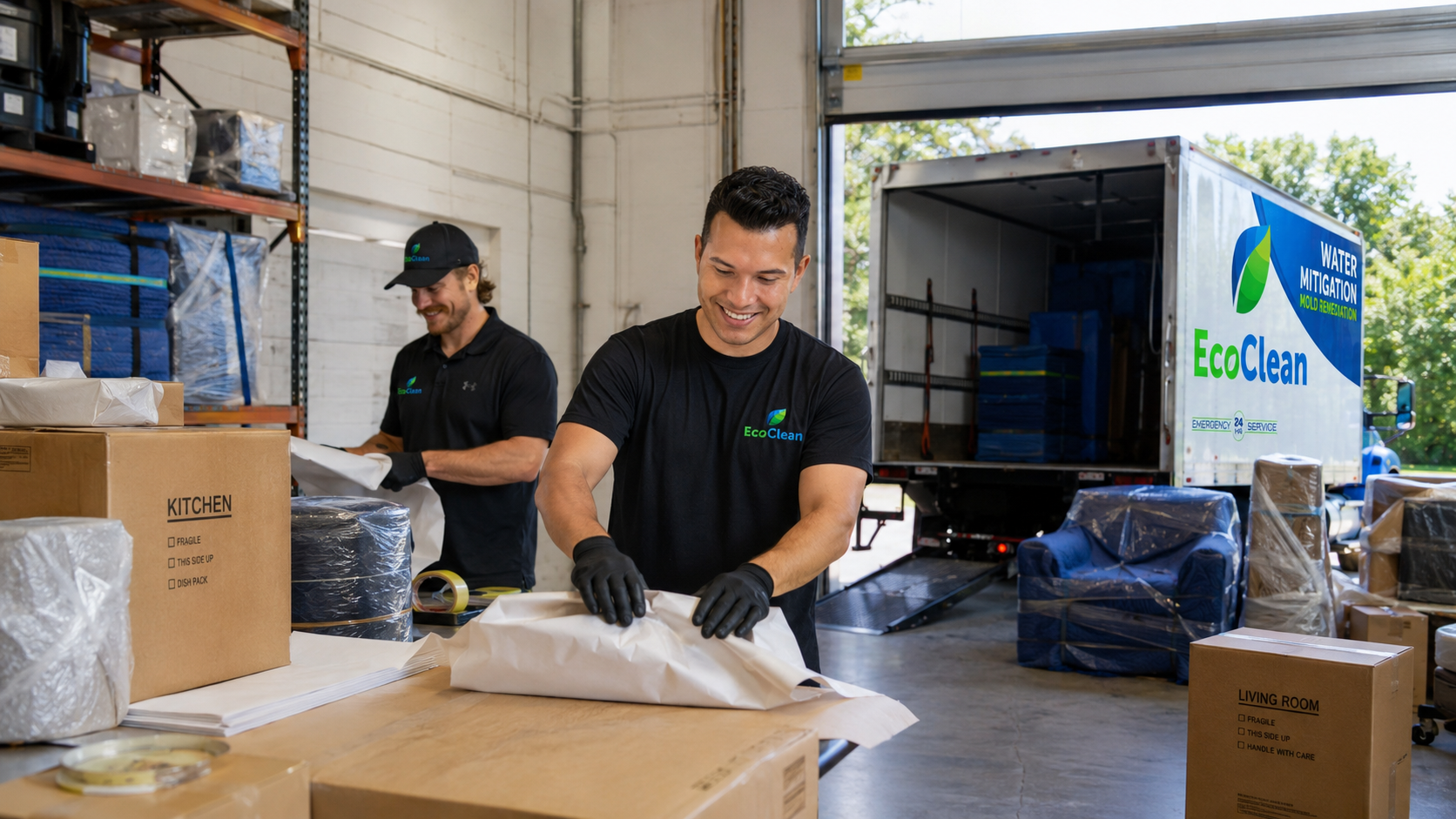
Almost every serious job has a contents story.
Even when the structural damage is contained, your belongings often need separate attention. Doing this badly is where most restoration jobs fall apart.
- Water damage
Anything wet that wasn’t supposed to be wet — books, upholstery, paper, electronics, photos. Time-sensitive, especially with cat-2 or cat-3 water.
- Fire & smoke
Soot reaches into closets, drawers, fabric, and books through HVAC and airflow even far from the burn zone. Most items are recoverable with the right cleaning.
- Mold
Affected soft goods near growth often need cleaning or controlled disposal. We’ll tell you which is which item by item.
- Asbestos & complex jobs
Contents in affected areas need careful handling. We coordinate pack-out around the abatement schedule.
- Reconstruction
Even when the damage is structural, you may want pack-out so the build crew can work freely and your belongings stay clean.
Six stages, one chain of custody.
- Step 01
Protection
Affected zones sealed off before anything moves. Sensitive items pulled first.
- Step 02
Inventory
Item-level digital inventory with photos. The list lives in your portal from day one.
- Step 03
Pack-out
Boxed, labeled, loaded into the climate-controlled truck. Sentimental items handled separately.
- Step 04
Cleaning
In our facility — fabric, electronics, photos, hard goods. Right method per material.
- Step 05
Storage
Climate-controlled until the home is ready. Accessible if you need something mid-job.
- Step 06
Return
Delivered back room by room. We unbox where you want it; the inventory list reconciles every item.
The wedding album, your grandfather’s watch, the kids’ first drawings.
When we walk through the damage, almost every customer at some point asks a quieter question — “can you save this one specific thing?” That’s the conversation we’re built for. Sentimental items get pulled first, handled separately, cleaned by hand when the material allows, and tracked in their own inventory. Tell us what matters, and we’ll tell you what we can do.
We don’t promise miracles. When something can’t be saved, we say so before we try, and you decide what happens to it.
Your contents claim is only as strong as the inventory behind it.
Most contents disputes between homeowner and insurance company come from missing inventory or vague valuations. We document everything item by item — photographed, categorized, in the format insurance companies ask for — and complete files remove the most common cause of delay.
See how the claim worksItem-level inventory
Every salvaged piece logged with photo, room of origin, category, and condition. Shared with your adjuster.
Damaged-items list
Items beyond restoration logged separately with photos and disposal authorization. Common source of contents claim disputes — we get it right.
Valuation support
Replacement-cost documentation for every item — make, model, age, condition, photos. What your policy covers is between you and your insurance company.
Portal access
The inventory lives in your customer portal. You can check items, status, and location from your phone any time.
The careful version, not the fast version.
“Kitchen fire and whole-home smoke. They packed our contents out, cleaned everything in their facility, rebuilt the kitchen, and we were back in within five weeks. One company, start to finish.”
“Our basement flooded on a Sunday night and EcoClean was there within two hours. They handled extraction, drying, and the entire insurance paperwork. I never had to chase anyone.”
The things people ask when their belongings are involved.
Do I have to do pack-out?
No. Some jobs are better with belongings in place. We’ll tell you which approach fits your situation.
How do you handle things I don’t want anyone touching?
Tell us before we start. We’ll leave them or pack them with you present. No pressure either way.
Can I get something back mid-job?
Yes. Items in our facility are inventoried and accessible. Tell us what you need and we’ll bring it.
What happens to items beyond restoration?
Logged with photos, valuation, and disposal authorization, then added to the claim file. Nothing leaves your home without a record.
Where is the storage facility?
Climate-controlled space inside our Downers Grove operation. Same building, same crew, same security.
How long can contents stay in storage?
As long as the project needs. Most stays are 2–8 weeks. We coordinate return with your reconstruction schedule.
Tell us what matters most.
Every project starts with a conversation about the items that aren’t replaceable. We’ll plan around them.