
Mold and sewage, handled start to finish.
We find what caused it, fix that too — and we won’t sell you work you don’t need.
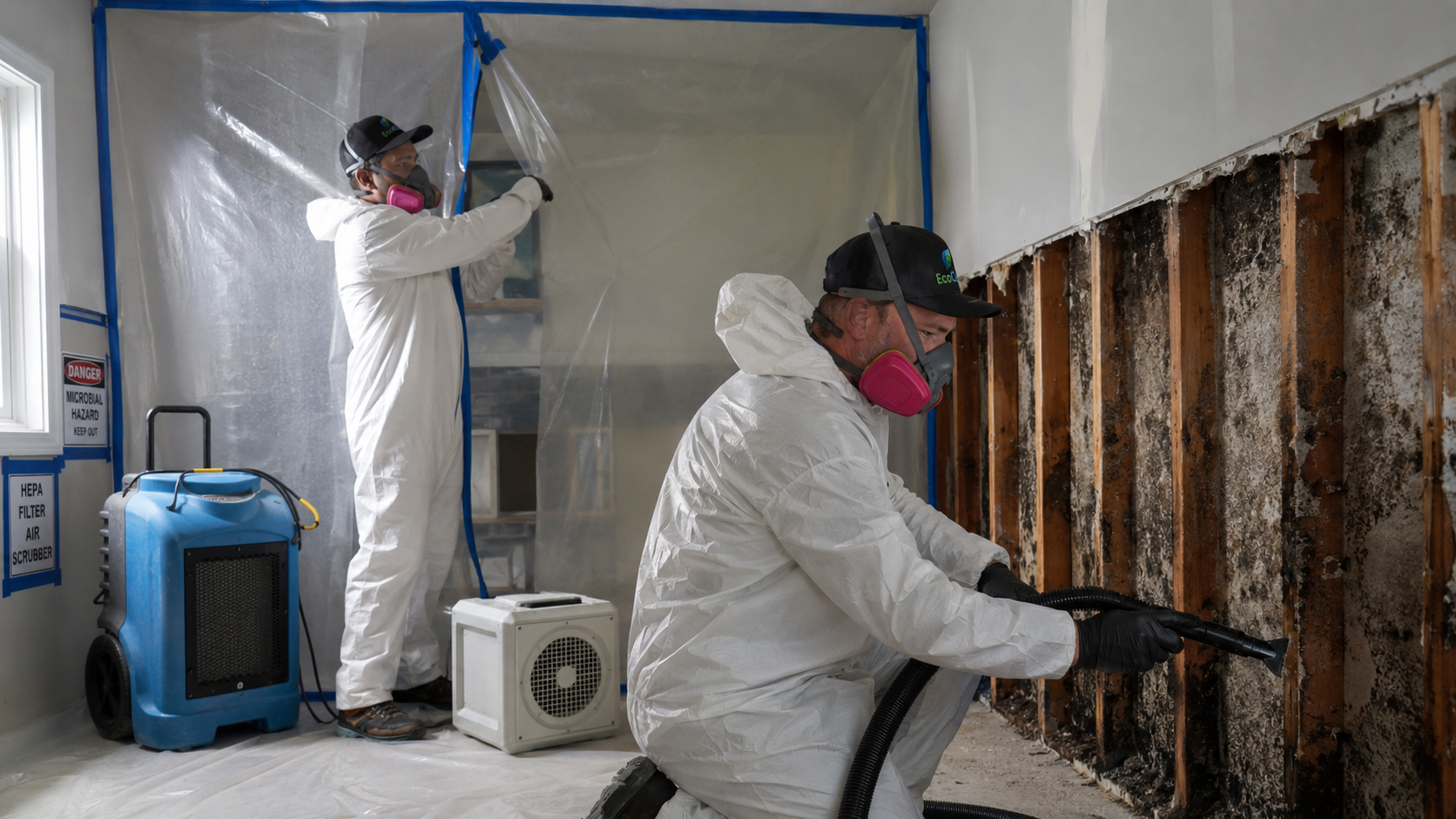
Mold is usually a symptom of something else — a slow leak, a hidden water problem, a dry-out that stopped too soon. We find the source, contain the area, remove what has to come out, and keep everything in one scope so nothing gets handed off to a second contractor.
The inspection and estimate are free. You approve the scope and price before any work starts — and if you don’t need remediation, we’ll say so.
A real process, not a guessing game.
Mold work is mostly about being careful. The same crew that scoped the damage owns the remediation — and if it connects back to water, contents, or reconstruction, those don’t become separate projects.
- 01
Source assessment
We find the water problem behind the mold first. A slow leak, a dry-out that stopped too soon, condensation — whatever it is, that gets fixed too.
- 02
Containment
Plastic sheeting, negative-pressure setup, foot-traffic protocols. The point is keeping spores from migrating into clean areas of the home.
- 03
Removal
Affected materials come out. Treatments applied where appropriate. Air scrubbed continuously while the work is happening.
- 04
Verification
When the job calls for clearance testing, we don’t close out until it passes. Either way, you get the photos and moisture logs showing the area is dry and clean.
- 05
Connect to the rest of the job
If reconstruction follows, the same team picks up. If documentation is needed for a claim, the file moves with the work.
Most mold concerns fall into a few common patterns.
Musty smell in a basement
Often the first sign before visible growth. Usually points to humidity or a hidden leak.
Visible spots on drywall
Color and texture matter — we’ll tell you whether it’s active growth or surface staining.
Water event that wasn’t fully dried
If structure stayed wet more than 48 hours, mold usually follows. We’ll check the cavity.
Mold found during real estate inspection
We’ll scope the work and prepare the documentation the buyer or seller needs.
New respiratory symptoms in the home
Worth investigating. We look at where in the home symptoms appear and what the building is doing.
Sewage backup
Category 3 water — it needs containment and antimicrobial treatment right away. We’re on site in 60–90 minutes, day or night, and handle it end to end.
Mold rarely shows up alone.
The reason it’s a problem is almost always upstream — a slow leak, an incomplete dry-out, a sewage event, an asbestos-era wall cavity. We don’t treat mold as an isolated thing. We’ll figure out what caused it, fix that, and keep the whole project in one scope.
Past water damage
If the structure stayed wet more than 48 hours, the cavity may have grown mold. We can usually tell during a free assessment.
Slow plumbing leaks
Drip-rate leaks behind walls and under sinks are the single most common cause we see. Thermal imaging finds them without opening anything.
Sewage events
Anything Category 3 needs proper containment, antimicrobial treatment, and sometimes structural removal. The same team that scopes the damage handles the cleanup.
Asbestos in older homes
Pre-1985 construction sometimes has asbestos in the materials we’d normally remove during mold work. Handled within the same project.
Careful, documented, certified.
Mold work that’s done sloppily fails — either because the source wasn’t fixed or the containment was poor. We do the boring parts well so the visible parts don’t come back.
IICRC-certified technicians
Industry-standard training in water, fire, and mold. Every tech on the job.
Containment that matches the job
Plastic sheeting, negative pressure, decontamination zones — scaled to the affected area and nothing more.
Air filtration through the work
HEPA scrubbers running continuously while affected materials come out.
Documentation that holds up
Photos, scope, moisture logs, treatment records — in the format insurance companies ask for if a claim is involved.
A slow leak that turned into a mold and asbestos job.
We fixed the leak, removed the mold, handled the asbestos, and connected the job straight into the rebuild.
“Found mold in the crawlspace two weeks after a slow leak under the kitchen sink. EcoClean was out the next morning, sealed it off, pulled the bad insulation, and walked us through the report for our insurer. No surprises. No upsells.”
Things people ask the first time they see growth.
Do I need to test for mold first?
Sometimes. If the cause is obvious — a known water event or visible growth — testing usually isn’t worth the cost. If the situation is ambiguous or you need documentation for a real-estate transaction, testing helps.
Will insurance cover mold remediation?
Depends on the cause. Mold from a covered water event (burst pipe, appliance failure) often is. Long-term-leak mold often isn’t. Either way, we document the cause and help you file the claim — coverage itself is between you and your insurance company.
Can I stay in the house during the work?
Usually yes. Containment is designed to keep the affected area sealed off. We’ll talk you through what to expect during the work — noise, foot traffic, schedule.
How long does it take?
Small contained jobs are 2–4 days. Larger or crossover jobs (asbestos, full water damage) can run 1–3 weeks. We give a real timeline at the estimate.
Does the smell come back?
Not if the source is fixed. If we’re only treating symptoms — masking with sprays — yes. We don’t work that way.
What if the source is a leak from a neighbor?
We’ll help you document the cause for an HOA, association, or third-party claim. Common situation in multifamily buildings.
Start with a free assessment.
We’ll come look at it, scope the work, and tell you straight whether you need remediation — or whether you don’t.